Configuring the map
Everything you arrange here is included in your share link, so your team opens on the screen you leave.
What features are called
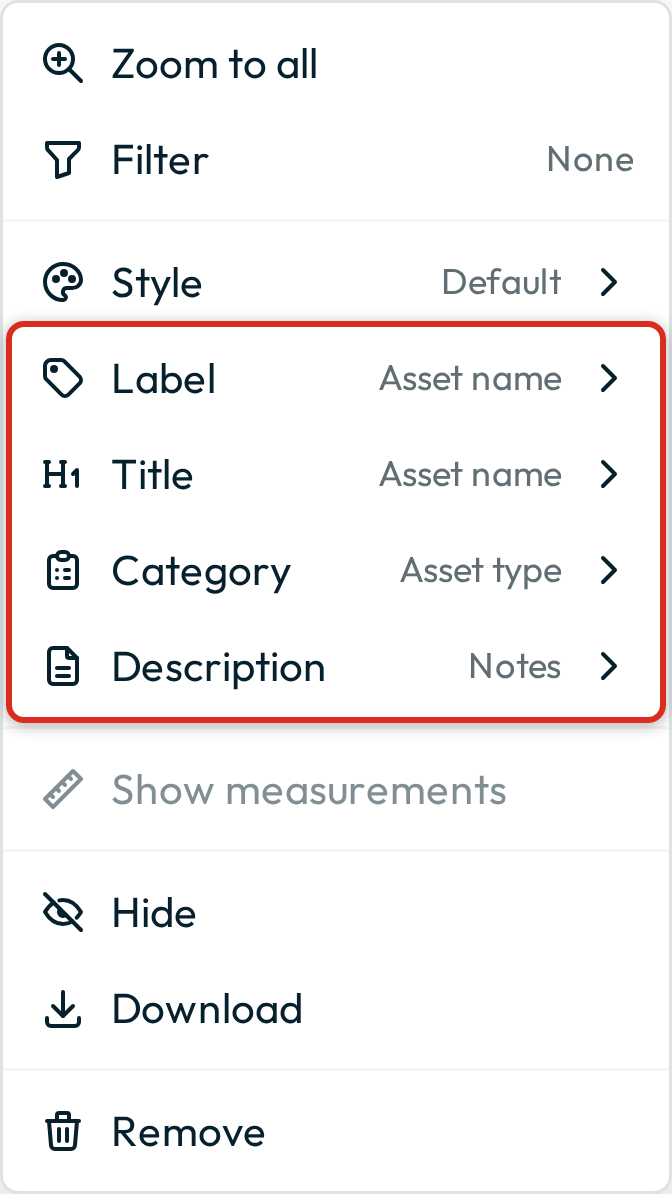
The layer’s ⋮ menu sets which field names a feature, which one labels it on the map, and what appears beside and beneath it in the list. Naming and drawing the layer in the User Guide describes each of them. Your data source decides where they start, a QGIS project’s display field becomes the Title and a categorised style supplies the Category, and anything you change here wins.
Which style a layer draws
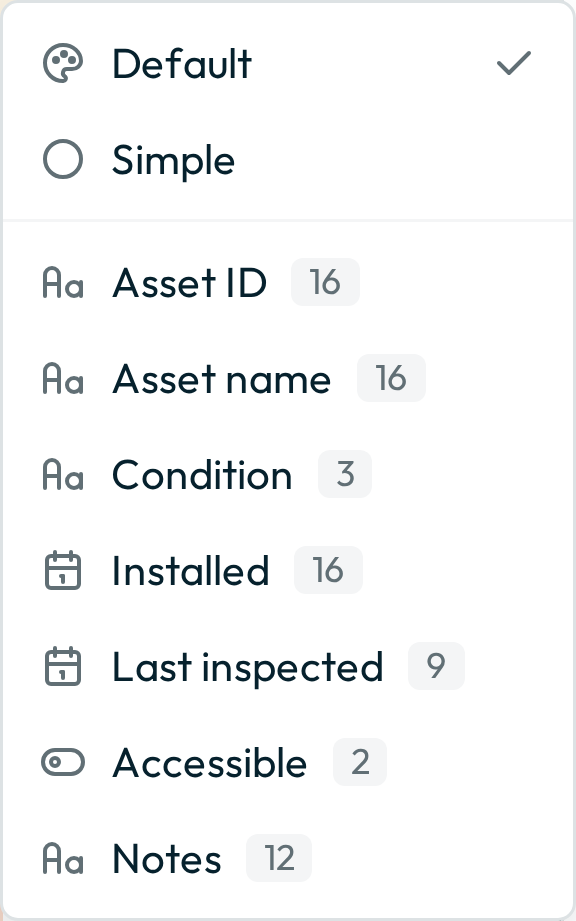
A QGIS layer can hold several named styles, and Groundwork publishes all of them. The Style row in the same menu lists them, with the one your project marks as current drawing by default, then Simple and the layer’s own fields to colour by. The link includes your choice, so your team opens on the style you left active, including a symbol you set for a layer.
The rest of what the link sends
- Filters. The Filter panel narrows the map and the list to the values you tick, so your team opens on that subset: the trees needing inspection, or this year’s plantings.
- Sort. The Sort menu, at the end of the row of controls above the feature list, sets the order features are listed in.
- Where the map opens. Pan and zoom to the area your team should start in, so a map for a particular depot or ward starts there. A map built from a QGIS project already opens on the view the project was saved with; a view you set here overrides that for the people you send the link to.
- The active layer. If your map holds more than one layer, the layer you leave active is the one whose features fill your team’s panel and the one they edit. Layers you leave hidden open hidden, ready to be shown, which is how to ship context layers without cluttering the panel.
- The background map. Every map has a base map behind the data, and whichever you leave active is the one your team opens on.
What the recipient can change
Everything above is sent as a default, and the recipient can change any of it. Bookmarks and unit preferences are never included at all: see what a link leaves behind.
Next: Sharing your map.